
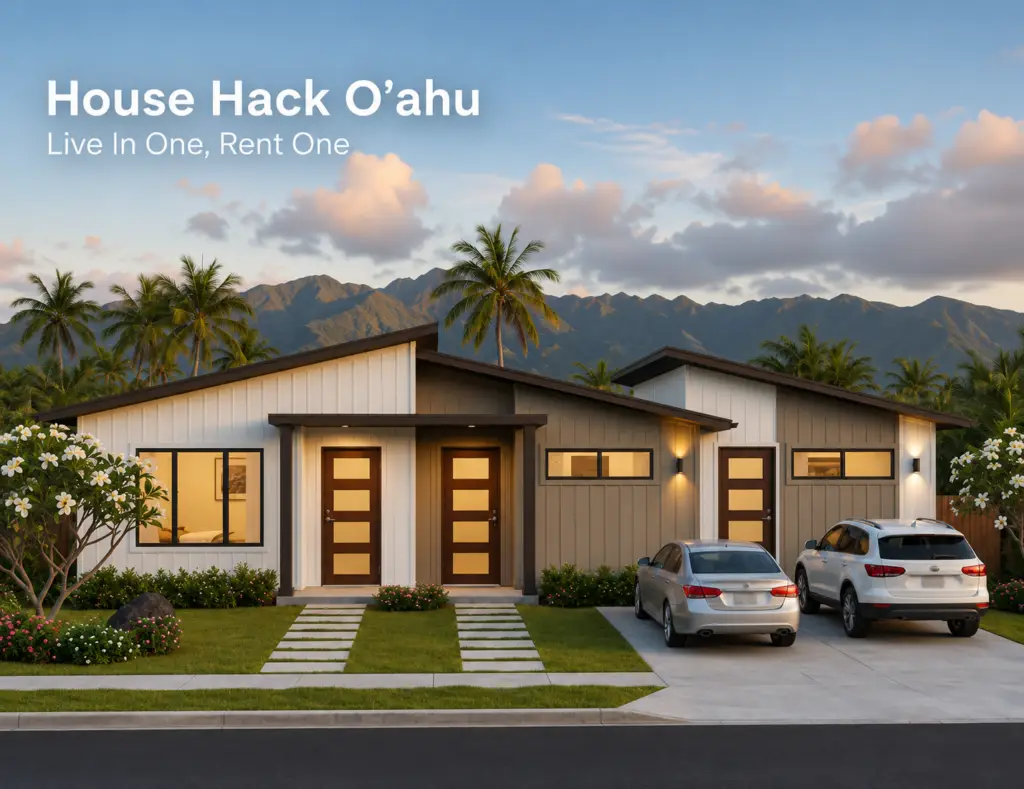
House hacking is one of the few strategies that can make buying on O‘ahu feel workable sooner rather than later. The idea is simple: you live in part of your home and legally rent out the rest, so the rental income helps offset (not necessarily eliminate) your mortgage and overall housing costs.
For many first-time buyers in Hawai‘i, this isn’t about becoming a full-time investor. It’s about turning your first home into a smarter steppingstone instead of stretching yourself thin in a very expensive market.
Quick Answers About House Hacking in Hawai‘i
What is house hacking in Hawai‘i?
House hacking in Hawai‘i means buying a home you live in and renting out part of it — spare bedrooms, a separate unit, or an ‘ohana/ADU — so the rental income helps offset your mortgage and other housing expenses.
Why is house hacking in Hawai‘i so popular now?
Because O‘ahu prices and rents are high, using rental income to help cover housing costs can make ownership more realistic for first-time buyers who would otherwise stay renters longer.
Do I need a duplex or ‘ohana to house hack in Hawai‘i?
No. A duplex or ‘ohana property works well, but many owners simply rent out a bedroom, a separate-entrance downstairs unit, or a permitted ADU.
Can a first-time buyer use low-down-payment loans to house hack?
Often yes. Many first-time buyers use owner-occupant loans (like FHA, certain conventional programs, or VA if eligible) to buy 1–4 unit properties, live in one unit for at least a year, and rent the others.
Is short-term Airbnb-style house hacking legal on O‘ahu?
Short-term rentals are heavily restricted and generally limited to resort-zoned areas or properties with specific permits. Most house hackers on O‘ahu plan on 30+ day rentals to stay compliant.
What House Hacking Really Looks Like on O‘ahu
On O‘ahu, house hacking rarely looks like a big mainland fourplex. More often, it’s a single-family home with some form of rentable space: a downstairs unit, a permitted ‘ohana, or extra bedrooms with shared common areas.
You live in one portion of the property and rent the rest long term (30+ days). That rent helps offset your monthly housing costs — principal, interest, taxes, insurance, and sometimes utilities. The goal for most buyers isn’t to live “for free,” but to reduce their out-of-pocket cost to something closer to (or below) what they’d otherwise pay in rent.
In practice, common O‘ahu house hacking setups include:
- Upstairs/downstairs homes with separate entrances
- Main houses paired with an ‘ohana or ADU
- Room rentals within a single home
- Small multifamily properties with 2–4 units where you live in one and rent the others
This approach allows buyers to enter the Hawai‘i market sooner, build equity, and gain hands-on experience managing a property they actually live in.
Choosing the Right Setup: Rooms, Duplex, or ‘Ohana?
When buyers explore house hacking options in Hawai‘i, they’re usually deciding among three general structures. Each comes with different trade-offs in privacy, price, and long-term flexibility.
1. Renting spare rooms
Renting spare rooms is often the lowest-cost entry point. Purchase prices are typically lower, and rental income can begin quickly once you move in. This setup can work in many single-family homes, condos, and townhomes, though HOA rules always need to be checked.
That said, there are real trade-offs to consider:
- Shared kitchens, living areas, or laundry spaces
- More day-to-day interaction with tenants
- Increased hands-on management as a live-in landlord
This approach tends to work best for buyers who are comfortable with roommates and want the most affordable way to get started.
2. Duplex or 2–4 unit property
A duplex or small multifamily property offers the cleanest structure on paper, but these properties are harder to find on O‘ahu. The benefit is clear separation between your living space and the rental, and many loan programs still treat 2–4 unit properties as residential for owner-occupants.
The main challenges typically include:
- Limited inventory and strong competition
- Higher purchase prices and total monthly payments
- Living directly next to your tenant
This option appeals to buyers who want clearer boundaries and are prepared for a higher overall budget if the rental income supports it.
3. Single-family home with ‘ohana, ADU, or separate entrance unit
This is one of the most common house hacking setups on O‘ahu. These properties are especially common in older neighborhoods and often strike a good balance between privacy and income.
Buyers are often drawn to this setup because it offers:
- A separate living space with more privacy
- Flexibility for tenants now and family use later
- A layout that supports multigenerational living
However, it’s critical to confirm that the unit is legal and properly permitted. Some zoning or permits limit use to “ohana” (family) only, and layouts aren’t always as clean as a true duplex. For many local buyers, though, this structure fits both financial and family goals well.
Financing & Numbers: Will It Really Offset Your Mortgage?
Most first-time buyers ask two big questions early: Can I qualify? and Will this actually help month to month?
Step 1: Choose an owner-occupant loan strategy
Common paths for house hackers on O‘ahu include FHA loans, conventional owner-occupant loans, and VA loans for eligible buyers. Each allows you to purchase a primary residence while renting out part of the property, provided you meet occupancy rules.
No matter which loan you use, the most important move is telling your lender early that you plan to house hack. You’ll want clarity on:
- Whether projected rental income can help you qualify
- What documentation is required to support that income
- Any special rules for 2–4 unit properties or ‘ohana-style layouts
Step 2: Run a simple, Hawai‘i-specific cash-flow check
Before writing an offer, you want to understand how much of your housing cost you’ll realistically carry.
Start by estimating realistic rental income for the rooms or units you’ll rent, using long-term (30+ day) terms and legal use only. From there, subtract your fixed monthly costs, including:
- Principal and interest
- Property taxes
- Homeowners or condo insurance
- Required HOA fees (if applicable)
- Required mortgage insurance (if applicable)
Then factor in landlord-related costs, such as maintenance reserves, vacancy allowance, and any utilities you plan to include.
Once rent comes in and costs go out, the key question becomes simple: what does your share of housing cost look like, and are you comfortable with it? For many O‘ahu buyers, success means reducing their out-of-pocket cost to something comparable to renting, while gaining ownership and equity instead of writing a rent check.
Rules, Risks, and Fit: Is House Hacking Right for You?
House hacking works best when buyers are realistic about legal rules, lifestyle changes, and financial risk.
Legal and zoning considerations
Before moving forward, it’s critical to verify that zoning and permitted use support your plan. Any ‘ohana, ADU, or separate unit should be properly permitted, and you’ll want to confirm whether rental to non-family tenants is allowed if that’s your intention.
You’ll also need to account for:
- Short-term rental restrictions that limit daily or weekly rentals
- HOA or condo rules that may restrict room rentals or lease terms
- Any limits on how many units within a project can be rented
If your numbers only work because of a use that isn’t legal, that’s not a strategy — it’s a gamble.
Lifestyle fit
House hacking is as much a lifestyle decision as a financial one. It helps to be honest about your comfort with shared space, your willingness to handle tenant screening, leases, and repairs, and your need for privacy. Layout matters, especially if you work from home or have children. Separate entrances, sound separation, and defined outdoor areas can significantly reduce friction.
Managing financial risk
Managing risk starts with simple guardrails. Stress-test your budget for vacancies or unexpected repairs, maintain a reserve account for property expenses, and think beyond the first year about how the property might fit into your longer-term plans. Used thoughtfully, house hacking can be a launch pad rather than a short-term experiment.
Local Scenario: Kapolei Upstairs/Downstairs House Hack
Imagine buying a two-story single-family home in Kapolei where a permitted downstairs unit has its own entrance, wet bar, and full bath. You move into the three-bedroom upstairs and lease the one-bedroom downstairs on a long-term lease.
Your monthly payment is higher than what you paid in rent before, but the downstairs rent covers a meaningful portion of it. Instead of stretching to carry the full payment alone, your share feels closer to what you’d pay for a smaller rental — while you build equity in a growing West O‘ahu community.
Over time, as your income increases, you pay extra toward principal. Eventually, you may move and keep the property as a full rental, turning your first home into a long-term investment.
FAQs
Is house hacking allowed in all O‘ahu neighborhoods?
House hacking itself is common, but legality depends on zoning, permits, and HOA rules. The safest approach is confirming permitted use for each property before making an offer.
Can I house hack a condo or townhome?
Sometimes. Many owners rent out a room, but HOA documents and lease-term rules must be followed. Some buildings restrict rentals entirely.
What if I want to move out earlier than 12 months?
Most owner-occupant loans require you to intend to live in the home as your primary residence for about a year. If you plan to move sooner, discuss this upfront with your lender to stay compliant.
Conclusion + Next Steps
House hacking on O‘ahu isn’t a shortcut or a get-rich-quick move. It’s a practical way to make an expensive market more manageable while building long-term stability.
Thinking about house hacking on O‘ahu?
If you’re 3–12 months from buying and wondering whether a duplex, ‘ohana/ADU, or room-rental setup could realistically work for you, the next step is simple.
Connect with our team to review owner-occupant financing options with a local lender, then we’ll walk through real listings and neighborhoods that make sense legally, financially, and for your lifestyle.
With the right planning, your first home can do more than give you a place to live. It can help support itself while you build long-term stability in Hawai‘i.